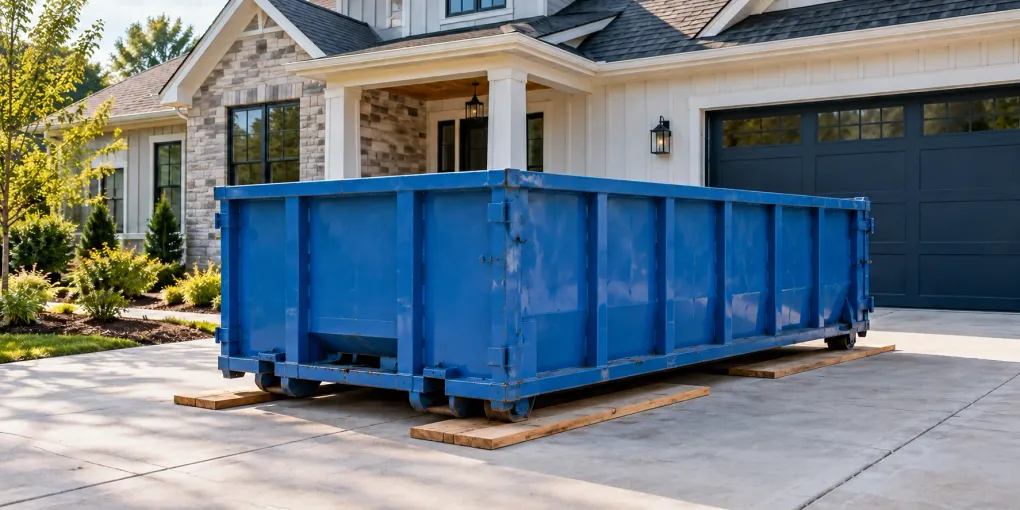
A garage cleanout and a bathroom demolition can produce very different loads. One may fill a container with bulky, lightweight items; the other may reach a weight limit while the dumpster still looks partly empty.
The right dumpster rental depends on debris type, volume, weight, and delivery access. Tell the provider what you are removing before choosing a container by its advertised size.
Understand dumpster volume and weight limits
Dumpster capacity is commonly described in cubic yards. One cubic yard equals 27 cubic feet. That is a measure of space, not a promise about how much weight the rental includes.
Actual container dimensions vary, and a quote should identify both the nominal capacity and the included weight allowance. Ask for the overage rate and the maximum permitted load. Heavy materials may require a dedicated container or a lower fill level than ordinary household debris.
Do not assume that a larger container lets you dispose of an unlimited amount of concrete, tile, or soil. The hauler needs to approve the material and loading plan.
Match the conversation to your project
For a household cleanout, list the large items first. Cabinets and furniture can occupy space inefficiently, and some items may have separate acceptance rules or charges. Ask whether usable items can be separated for donation before you finalize the debris estimate.
For a renovation, describe the rooms, materials, and approximate quantities. Flooring, cabinetry, wallboard, fixtures, and packaging create different disposal needs. Photos can help the provider understand the project, although they do not replace its own sizing assessment.
If your project involves drywall repair or replacement, ask the contractor whether debris removal is already included. Avoid paying for the same service twice.
For roofing or heavy demolition, have the contractor and hauler coordinate the material estimate. A broad description such as “one small job” is not enough to establish a safe load.
Ask exactly what can go in the dumpster
Get the provider’s accepted-materials list before loading anything. Confirm any special rules for appliances, mattresses, tires, electronics, yard waste, and mixed construction debris.
Paints, cleaners, oils, batteries, and pesticides may contain hazardous ingredients. The EPA’s household hazardous waste guidance recommends special care in handling and disposal. Ask your local waste authority about the appropriate collection route, and do not place these materials in the rental container unless the specific waste stream is expressly accepted.
Suspected asbestos-containing materials also require specialist assessment and an appropriate disposal plan. A general dumpster rental is not a substitute for that process.
Keep the written restrictions available to everyone helping with the project. One person adding an unapproved item can create a problem for the entire load.
Check placement before delivery day
Measure the proposed area and ask the hauler for the truck’s access and clearance requirements. Container dimensions alone do not account for the room needed to maneuver, unload, open a rear door, or collect the container later.
Discuss the surface and any protection the hauler recommends. Keep the delivery path clear of vehicles, low branches, and other obstructions. Do not block necessary access to the house.
If you plan to use a street or another public area, check placement permission and local requirements with the relevant authority. Ask the provider who is responsible for any required authorization; do not assume it is included.
Compare the full dumpster rental price
Request a quote that identifies:
- Container capacity and accepted debris type.
- Included rental days and the daily extension charge.
- Included weight and the overage rate.
- Delivery, collection, disposal, and other applicable fees.
- Charges for prohibited items or unsuccessful pickup.
- The cost and scheduling process for a container exchange.
Ask when the rental period starts and whether collection must be requested. An apparently low price can represent a different allowance or service scope from another quote.
Load within the provider’s instructions
Respect the marked fill line and any lower limit for heavy debris. Keep material from projecting above the container, and follow the hauler’s guidance for distributing the load. Never enter a container to compact waste or burn material inside it.
If the job expands, call the provider before overfilling. An exchange or revised plan is easier to organize while the container remains serviceable.
Frequently asked questions
Is a bigger dumpster always the better choice?
No. The suitable size depends on access, debris volume, material type, and allowable weight. Ask the provider to explain its recommendation for your project.
Can I mix construction debris with household junk?
Only if the provider accepts that combination. Mixing materials can change disposal requirements, pricing, or whether the load can be collected.
How do I avoid unexpected fees?
Confirm rental days, weight allowance, accepted materials, loading limits, and pickup terms in writing. Keep the collection route clear and contact the provider before your plans change.
Find a dumpster rental connection
Choose Dumpster Rental on the Quick Service Search services page, or call (888) 987-1493. Confirm service-area coverage, container availability, and pricing with the provider. Quick Service Search connects consumers with providers; it does not deliver or haul the containers.