A damaged wall can look like a simple painting job until a closer look reveals a loose seam, a deep hole, or damp drywall. Choosing between drywall repair and replacement starts with two questions: what caused the damage, and is the surrounding material still sound?
Small, dry, isolated defects are often candidates for repair. Larger damaged sections or moisture-compromised material may need replacement. The right scope depends on the condition of the wall, not just the size of the visible mark.
When a drywall repair may be enough
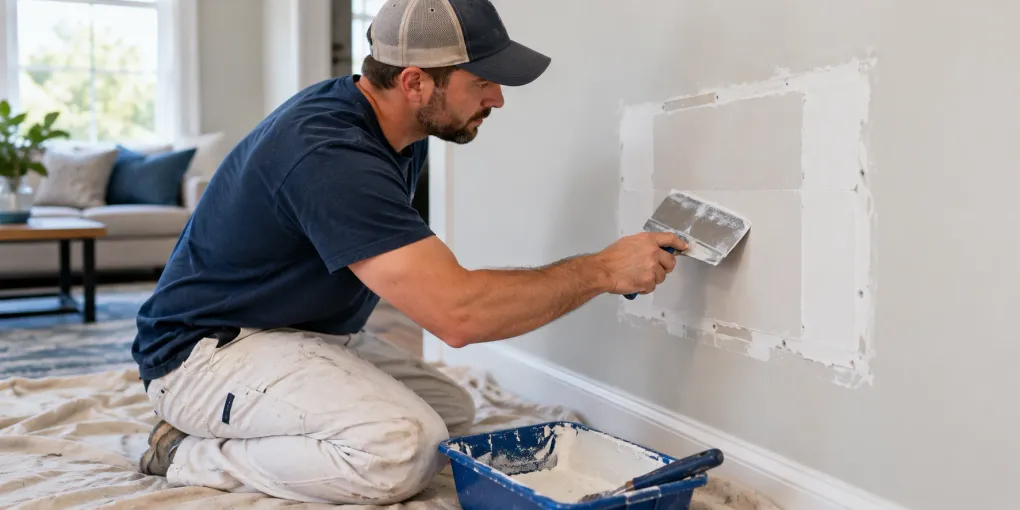
Small dents, old fastener holes, and localized impact damage may be addressed without replacing an entire wall. A contractor may fill a shallow defect or install a supported patch where material is missing.
For a lasting result, the surrounding board needs to be secure and the cause of the problem resolved. A crack that keeps reopening deserves investigation before another layer of compound is applied.
Ask what the finished repair includes. Patching, taping, applying compound, sanding, texture matching, priming, and painting are separate parts of the job. A quote that includes only the patch may leave you with a wall that still needs finishing.
When replacement deserves consideration
Replacement may be appropriate when board has lost its integrity, a damaged area is extensive, or access is required for work inside the wall. Sometimes replacing a defined section produces a more practical result than building a complicated patch across several weak areas.
The contractor should explain where the replacement will end and how the new material will be supported. Ask whether trim must be removed and whether insulation or other materials behind the wall need attention.
A visible crack does not by itself establish a structural problem. However, widening or recurring cracks, especially alongside movement or sticking doors, may call for an assessment of the underlying cause before cosmetic repairs proceed.
Water-damaged drywall needs a different approach
Fix the moisture source before restoring the surface. That may mean addressing a hidden plumbing leak, roof issue, or air-conditioning drainage problem.
EPA’s mold cleanup guidance explains that some water-damaged drywall may be dried in place when it has no obvious swelling and its seams remain intact. Swelling or damaged seams can change the decision. This is not a blanket rule that every wet wall can be saved: the water source, contamination, extent of damage, and ability to dry the wall cavity matter.
The EPA also emphasizes drying wet materials promptly, generally within 24–48 hours, to help prevent mold growth. That guidance is a reason to act quickly, not a guarantee that a wall is safe after a particular number of hours.
For sewage, significant flooding, suspected hidden mold, or extensive damage, seek a qualified restoration assessment. Painting over damp or moldy material is not a solution.
What affects a drywall repair estimate?
The visible hole is only part of the work. Ask how these details affect the quote:
- Access: ceiling height, stairs, furniture, and confined spaces.
- Preparation: protection for floors and furnishings, plus dust control.
- Material condition: whether surrounding board or insulation needs removal.
- Finish: smooth walls, textured surfaces, and matching an existing pattern.
- Painting: the repaired spot, one full wall, or a larger area.
- Cleanup: debris removal, disposal, and final cleaning.
Before cutting or sanding older or unknown finishes, ask whether hazardous-material assessment is needed. Do not assume every wall surface is suitable for ordinary demolition.
Set expectations for the finished wall
An invisible repair depends on more than filling the opening. Texture, sheen, color, and lighting can reveal a patch even when the board itself is flat. Ask to see examples of similar finish work and clarify what level of matching is included.
Also ask about drying time between coats and the number of visits. The work may involve several stages even when the damaged area is small. Get the scope and exclusions in writing so you know whether the final result will be ready for painting or fully painted.
For a larger renovation, coordinate debris removal early. Our dumpster rental size guide explains what to discuss with a rental provider.
Frequently asked questions
Can I paint over a water stain?
Only after the source has been fixed and the affected materials have been assessed, dried, and repaired as needed. Paint alone does not address moisture inside a wall.
Does one hole mean the whole wall needs replacing?
Usually the contractor will assess whether a localized repair is possible. The condition around the opening and the required support matter more than an automatic whole-wall rule.
Is painting included in drywall repair?
Not necessarily. Have the estimate specify preparation, priming, texture, paint, and the area to be painted.
Find a drywall service connection
Choose Drywall on the Quick Service Search services page, or call (888) 569-9310. Confirm the provider’s service area, scope, and pricing. Quick Service Search connects consumers with providers and does not perform the work.