A hidden plumbing leak does not always announce itself with a puddle. Sometimes the first clue is a water bill that makes no sense, a cabinet that smells damp, or a stain that returns after painting.
Look for changes that persist or happen together. One symptom alone rarely identifies the source. A plumber can help determine whether the problem comes from a supply pipe, drain, fixture, or something outside the plumbing system.
1. Your water use increases without an explanation
Compare consumption on your bills, not just the dollar total. A higher rate can increase the amount due even when you use the same volume of water. Also account for irrigation, houseguests, filling a pool, or a change in household routines.
If usage remains unusually high, investigate. EPA WaterSense home-maintenance guidance identifies an unexplained increase in a water bill as a possible leak indicator.
2. A stain appears on a wall or ceiling
Brown marks, expanding rings, or discoloration beneath a bathroom deserve attention. Photograph the area and note when it changes: after a shower, when an appliance runs, or following rain.
That timing matters. A roof leak or condensation issue may resemble a plumbing leak. Painting over the mark can hide a useful clue without addressing the source.
3. Paint bubbles or a surface begins to soften
Blistered paint, lifting finishes, or a soft area near a plumbing fixture may indicate moisture. Avoid cutting into the wall to investigate. Concealed wiring, pipes, and unknown materials can complicate an apparently small repair.
Keep people away from a sagging ceiling and arrange prompt assessment. Do not stand beneath it or puncture it to release water.
4. A musty smell keeps returning
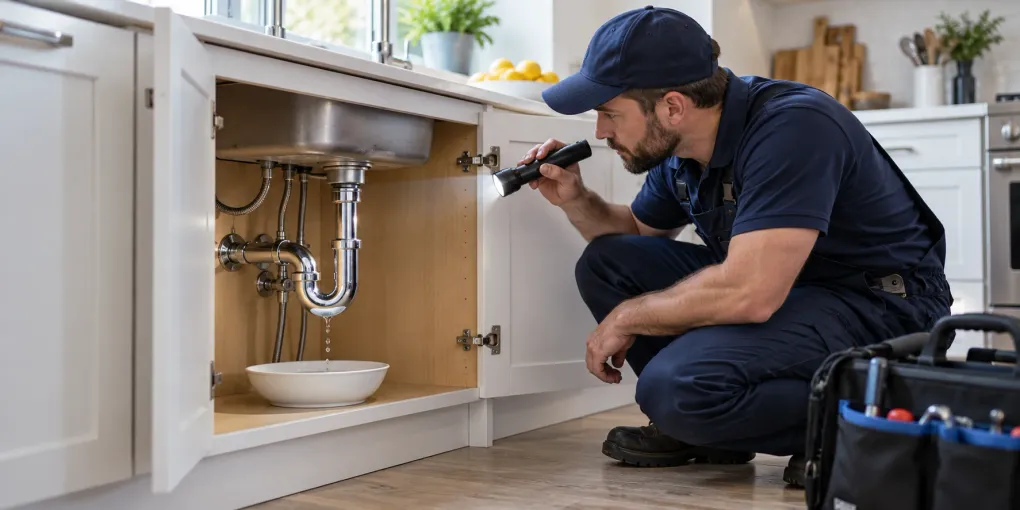
A persistent odor under a sink or inside a utility closet can justify checking for visible moisture. Look from a safe, accessible position and note damp stored items or staining around pipe openings.
An odor alone does not prove there is mold or a leaking pipe. Describe it to the professional along with other observations instead of assuming the diagnosis.
5. You hear water when fixtures should be off
Listen for a toilet refilling between uses or a recurring trickle. Some appliances use water automatically, so check whether an ice maker, softener, or irrigation timer explains the sound.
A toilet that runs intermittently may waste water without creating a wet floor. Include toilets in your observations even if you suspect a leak behind a wall.
6. Cabinet floors or baseboards show new damage
Swelling, staining, and separation around sink cabinets or appliances can be signs of repeated wetting. Take clear photos of the surrounding area as well as the damaged spot.
Do not pull out a heavy appliance or disconnect a supply line to look behind it. Share the location and appliance type when scheduling service so the provider can plan for access.
7. The meter changes during a no-use period
For homes with an individual, safely accessible water meter, a no-use check can help identify unexplained consumption. EPA WaterSense suggests comparing readings across two hours when no water is used.
Account for automatic appliances and irrigation during that interval. A changing reading can indicate water use or a leak, but it cannot tell you where the problem is. A stable reading also cannot rule out an intermittent drain leak that occurs only when a fixture runs. If the meter is shared or access is unsafe, ask the utility or property manager for help.
What to do before the plumber arrives
For active leaking, stop using the affected fixture. If you know the appropriate shutoff valve and can reach it safely, close it without forcing a stuck valve. Stay away from water near electrical equipment. Tenants should notify their landlord or property manager promptly.
Prepare a short timeline, photos, recent water-use records, and a list of affected fixtures. Ask whether the visit includes leak detection, what access may be needed, and who will restore any wall openings afterward.
Once the cause has been fixed and affected materials assessed, our drywall repair guide can help you plan the finish work.
Frequently asked questions
Can a pipe leak without lowering water pressure?
Yes. Normal pressure does not rule out a small or intermittent leak. Use several observations rather than treating pressure as a definitive test.
Do I need a plumber or a restoration company?
A plumber addresses plumbing faults. A water damage restoration provider may also be needed to assess and dry affected materials. Some situations require both services.
Should I wait until the next water bill?
Visible leaking, spreading damage, or persistent unexplained water use warrants earlier investigation. Another billing cycle will not locate the source.
Connect with a plumbing provider
Choose Plumbing on the Quick Service Search services page, or call (888) 356-1186 to ask about a connection. Confirm coverage, timing, and fees with the provider. Quick Service Search does not carry out plumbing repairs.