Your air conditioner is running, but the house still feels warm. Before you book an AC repair visit, a few simple observations can help you explain the problem and avoid overlooking an obvious setting.
Start with the thermostat, the air filter, and blocked vents. If those checks do not explain the problem, or you notice ice, leaking water, or an unusual electrical smell, stop troubleshooting and contact an HVAC professional. An air conditioner that is not cooling needs a diagnosis before anyone can recommend the right repair.
Check the thermostat settings first
Make sure the thermostat is set to cooling and that the target temperature is below the current room temperature. Review its schedule, too: an unexpected setback or away setting can make the system behave differently from what you intended.
If the fan is set to run continuously, air may continue moving when the system is not actively cooling. That can make room-temperature airflow seem like a new failure. Follow the thermostat manual when adjusting settings, and give the system time to respond instead of repeatedly switching it on and off.
Write down whether the problem affects the whole house or just one room. That distinction helps a technician narrow the investigation.
Look for an overdue filter change or blocked airflow
Check a user-accessible filter only as directed by your equipment manual, with the system switched off. If it needs replacement, use the correct size and a filter type approved for your system. Do not assume that the most restrictive filter will be the best match.
The EPA’s guide to home air cleaners recommends following the manufacturer’s replacement guidance and consulting an HVAC professional when filter compatibility is unclear.
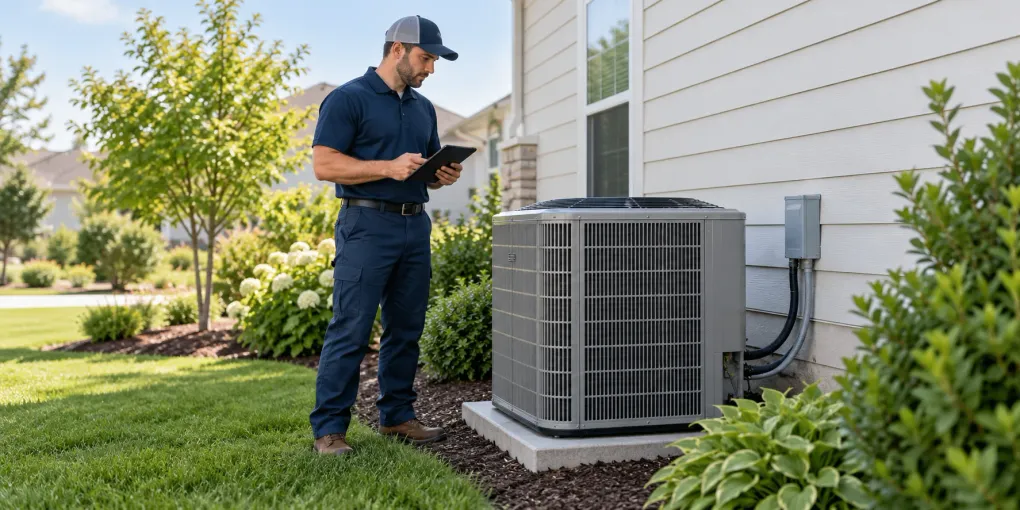
Walk through the rooms and look for rugs, furniture, or curtains covering supply registers or return grilles. Clear those obstructions without opening equipment panels. Outside, observe whether vegetation or stored items are crowding the condenser; ask the provider about the clearance your unit requires.
Notice the symptoms without opening the equipment
Useful observations include:
- The system runs continuously but the indoor temperature keeps rising.
- Airflow feels weak throughout the home.
- Some rooms are comfortable while others stay warm.
- Ice is visible on accessible refrigerant piping or equipment.
- Water appears near the indoor unit.
- The outdoor unit seems inactive while air moves indoors.
These symptoms can have more than one cause. A warm room does not prove that refrigerant is low, and ice does not identify a single failed component. Leave electrical testing, refrigerant work, and internal cleaning to a qualified technician.
If you see ice, stop cooling and contact a provider; do not chip it away. If you notice smoke or signs of fire, leave the area and contact emergency services. Avoid equipment near standing water.
What to ask an air conditioning repair provider
Before scheduling, explain what you observed and ask whether the company services your equipment type. Have the model information ready if it is accessible without removing a cover.
Ask about the diagnostic charge, any after-hours fee, and whether diagnostic charges are applied toward an approved repair. Request a written explanation of the findings and an itemized estimate before authorizing work.
If replacement is suggested, ask why repair is unsuitable and what the replacement quote includes. Equipment condition, repair history, comfort problems, installation requirements, and warranty coverage all belong in that conversation. A service call should leave you understanding the proposed solution.
Reduce repeat cooling problems
Keep a record of filter changes and service visits. Follow the manufacturer’s maintenance instructions and discuss professional maintenance with your provider. The Department of Energy’s Home Cooling 101 guide identifies routine filter care and maintenance as important parts of efficient cooling.
If water has damaged an adjacent wall, resolve the equipment or drainage problem before arranging drywall repair or replacement.
Frequently asked questions
Why is my AC blowing air but not cooling?
A thermostat setting, restricted airflow, or an equipment fault may be involved. Begin with the safe checks above. If the problem continues, professional testing is needed to identify the cause.
Should I keep lowering the thermostat?
Repeatedly lowering the setpoint will not fix a cooling fault. Record the indoor temperature and the setting, then share that information with the technician.
How much will AC repair cost?
The price depends on the diagnosed problem, parts, labor, access, and service timing. Ask for the diagnostic fee first and a written repair estimate once the cause is identified.
Find an air conditioning service connection
Visit Quick Service Search services and choose Air Conditioning, or call (888) 599-2029 to ask about a service connection. Confirm service-area coverage, availability, and pricing with the provider. Quick Service Search connects consumers with providers; it does not perform the repair work.