You turn on the kitchen faucet, expecting the usual rush of water. Instead, you get a thin trickle. After a freezing night, that small change can turn an ordinary morning into a worrying one.
Frozen pipes deserve prompt attention, but the first step is figuring out what you can safely observe. You do not need to start opening walls or dismantling plumbing. A few useful details can help you decide whom to call and explain the problem clearly.
This guide covers frozen pipe detection, practical prevention, and what to do when a water line may already be frozen. It is written for homeowners, renters, and people responsible for a small business property.
Already seeing a leak or flooding? If you can safely reach the building’s domestic water shutoff, close it and arrange urgent plumbing help. Stay out of water near electrical equipment, and do not cross a flooded area to reach a valve or electrical panel. For immediate danger in the United States, move to a safe location and call 911.
How to tell if your pipes are frozen
The most useful clue is a sudden change in water flow during freezing weather. Look for a pattern instead of relying on one symptom.
One faucet has little or no flow
If other fixtures still work, a local supply line may be frozen. A fixture problem is also possible.
What to do nextNote the affected fixture and whether hot, cold, or both supplies are affected.
Several fixtures have stopped working
A shared line, incoming supply, or wider water outage may be involved.
What to do nextCheck your utility's outage information and contact the utility or a plumber.
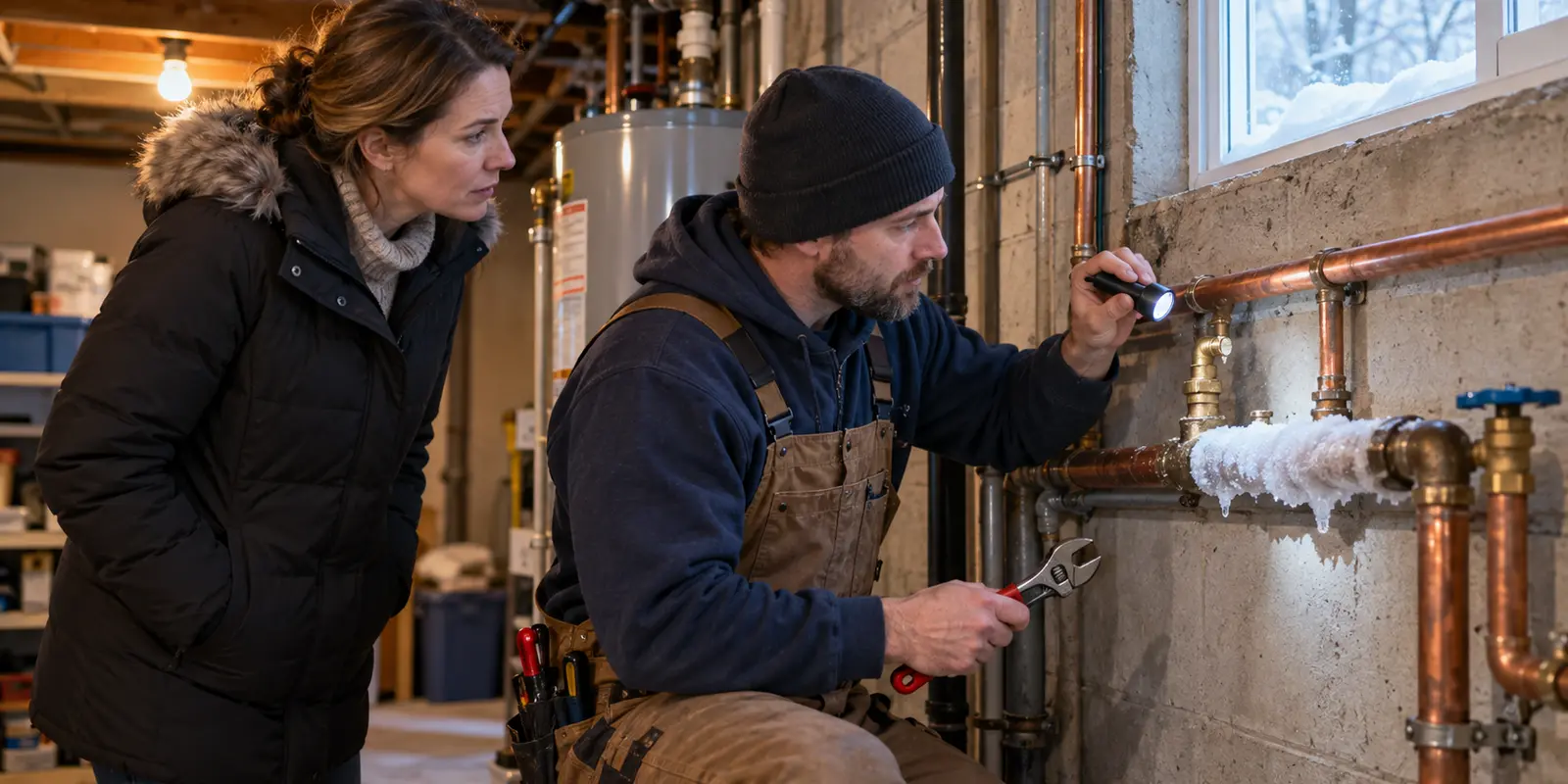
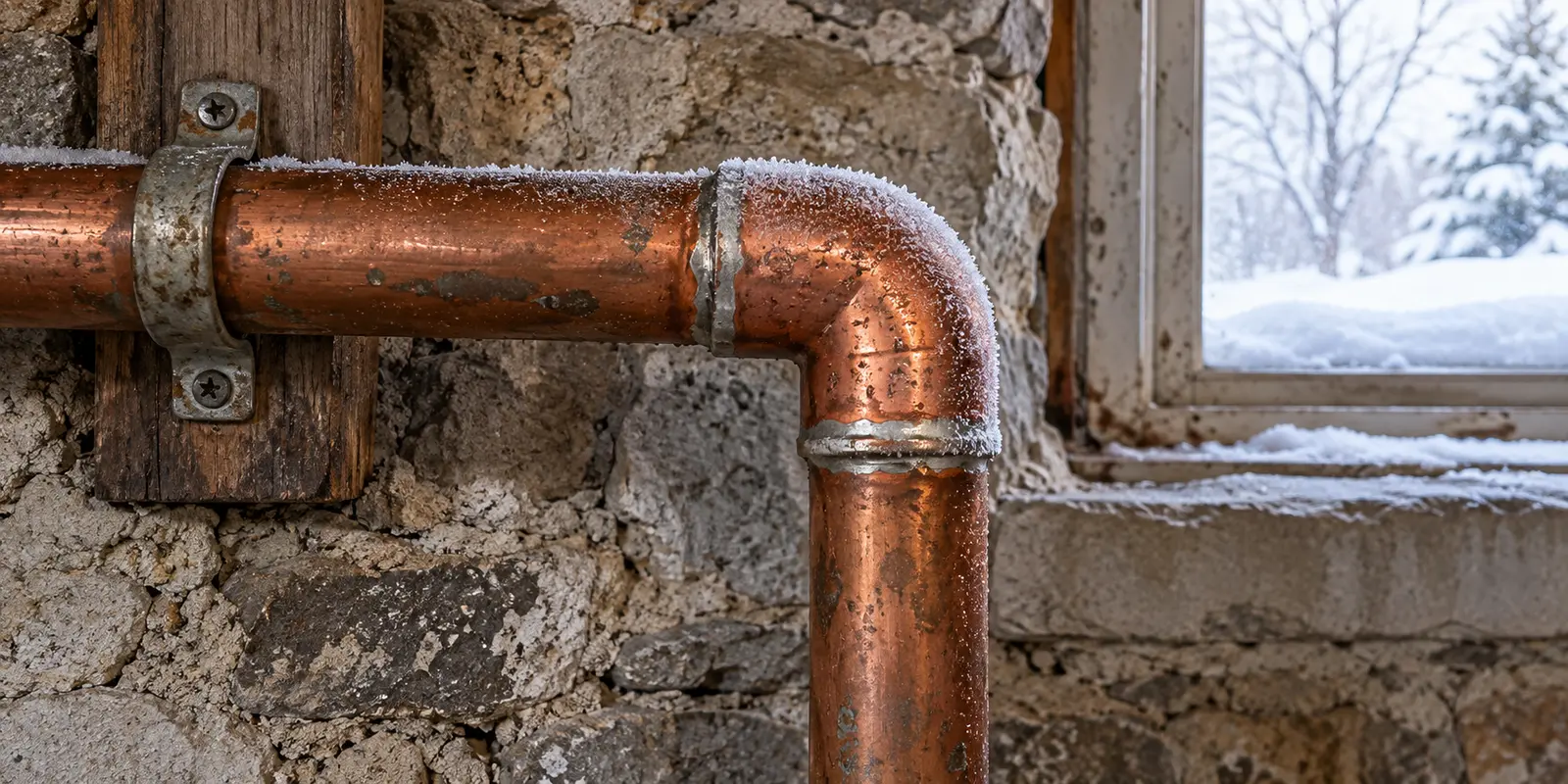
Frost appears on an indoor water pipe
Visible frost on an accessible pipe indicates exposure to freezing conditions.
What to do nextTreat it as a warning. Exterior frost alone cannot confirm the condition inside.
A pipe bulges, splits, or starts leaking
The line may already be damaged. Treat visible damage or leaking water as urgent.
Stop and get helpStop inspecting, isolate the domestic water supply if safe, and call a plumber.
Do not wait for visible ice. Much of a building’s plumbing is hidden, and a freeze can occur where the water line passes through a cold wall or enters through the foundation.
Pipes in garages, unheated basements, crawl spaces, and poorly insulated exterior walls are especially vulnerable. Both hot and cold water lines can freeze.
Frozen pipe detection: what to check without taking things apart
From safe, accessible areas, make a short record:
- When did the flow change? Was everything working the previous evening?
- Which fixtures are affected? Compare nearby taps briefly, then close any taps you are not intentionally monitoring.
- Has the heating failed? Note unusually cold rooms or a recent power outage.
- Is there visible moisture? Record a wet cabinet, new stain, or dripping joint without touching damaged plumbing.
- Has this happened before? Tell the plumber which room or pipe froze last winter.
For example, “The downstairs bathroom’s cold tap stopped this morning, but the kitchen still works” gives a plumber more to work with than “We have no water.”
Avoid pulling off insulation, forcing stiff valves, or entering a cramped crawl space to investigate. If the suspected blockage is inside a wall, leave locating and accessing it to a professional. Our guide to signs of a hidden plumbing leak explains other changes worth reporting.
Can a sensor detect frozen pipes?
Low-temperature sensors can warn that a monitored area is getting cold. Water-leak sensors alert you when water reaches their sensing points. Some systems combine these functions, but check the specific device’s capabilities before relying on it.
Neither a dry leak sensor nor a comfortable thermostat reading proves that every pipe is safe. A sensor monitors its location; a concealed pipe elsewhere can be colder. Use alerts as a reason to check conditions and contact help, not as a diagnosis of an ice blockage.
If you use remote monitoring, decide who will respond while you are away. An alert is much more useful when someone can safely check the property.
What to do if a pipe is frozen
Call a plumber if you cannot locate the frozen section, cannot reach it safely, or see damage. Contact your water utility about a suspected frozen meter or incoming service problem; do not attempt to thaw utility equipment yourself.
For an exposed household pipe that appears intact, in a dry and safely accessible area, gentle warming may help. Open the affected faucet slightly to give melting water an outlet, and keep the area under observation. Warm towels around the accessible section are one option. Restore normal room heating and open the sink cabinet to let warmer air reach the plumbing.
Never use a blowtorch, propane heater, charcoal burner, or another open flame. Keep electrical warming devices away from water and never leave them unattended. Do not try to speed things up with extreme heat, hammering, or bending the pipe.
Shutoff advice can depend on the condition of the line and local utility guidance. If damage is suspected, isolate the domestic supply if safe before any thawing attempt. If you are unsure whether the pipe is intact, ask a plumber rather than experimenting.
When flow returns, look for leaks around accessible pipes and joints. Thawing can reveal a crack that was not leaking while the water was frozen. Stop and get help if moisture appears or the flow remains abnormal.
How to prevent frozen pipes before the next cold snap
The best improvements address the cold spot that caused the problem.
Keep warmth around vulnerable plumbing
Keep garage doors closed where water lines run through the garage. During severe cold, open sink cabinets on exterior walls so room air can circulate; move cleaning products out of children’s and pets’ reach first.
Avoid deep overnight thermostat setbacks during a cold spell. If you leave home, keep the heat on. The American Red Cross advises at least 55°F when away, but exposed plumbing may need more protection. A thermostat setting is not a guarantee against freezing.
Insulate pipes and deal with drafts
Have accessible, exposed water pipes properly insulated, and address cold air entering around the building envelope. Keep required ventilation and combustion-air openings clear. Repeated freezing may call for a plumber’s assessment of the pipe route or a building professional’s assessment of insulation.
Pipe insulation slows heat loss; it does not generate heat. If heat cable is appropriate, use a listed product intended for that pipe material and follow its installation instructions. Ask a qualified professional if you are unsure.
Prepare outdoor plumbing
Disconnect and drain garden hoses before freezing weather. Follow the plumbing layout and manufacturer’s instructions for shutting off and draining outdoor faucet lines. Arrange appropriate winterization for irrigation and other seasonal systems rather than assuming one method suits everything.
Use dripping taps only when appropriate
A small flow through a vulnerable line can help during severe cold, but follow your local utility’s advice and any water restrictions. Keep the drain clear. Dripping one faucet does not protect unrelated pipes throughout the building, and it does not replace insulation or adequate heat.
A simple winter plan for homes and businesses
Before the next freeze, write down the domestic water shutoff location, your plumber’s number, and the utility contact. Renters should also have an after-hours number for the landlord or property manager.
For a shop, office, or other workplace, assign someone to report loss of heat, reduced water flow, and visible leaks. Employees should follow the site’s procedures and stay within their role; a plumbing concern is not a reason to enter restricted spaces or operate unfamiliar valves. Fire-sprinkler systems require their own qualified service arrangements.
Keep a short note of any incident: date, affected room, symptoms, and who was contacted. After repairs, ask what caused the freeze and what change would reduce the chance of another one. Getting water back is a relief. Knowing why it stopped is what helps you prepare for next time.
Frozen pipe questions people ask
Will a frozen pipe always burst?
No. Freezing can damage plumbing, but not every frozen line breaks. Continue checking for leaks as flow returns, and have suspected damage assessed.
Can pipes freeze even when the house feels warm?
Yes. A pipe in an exterior wall or unheated space may be much colder than the room where the thermostat sits.
Should I just wait for the weather to warm up?
Do not assume waiting is harmless. A damaged pipe may start leaking as it thaws. Arrange help when you cannot locate or safely access the problem, and treat any leak as urgent.
Find plumbing help for frozen or damaged pipes
If you need a professional, browse plumbing service options. Describe the symptoms, mention any visible damage, and confirm coverage, availability, and charges with the provider. QuickServiceSearch helps connect people with service options; it does not carry out repairs or guarantee response times.
Share this article
Know someone who might find this useful? Pass it along.