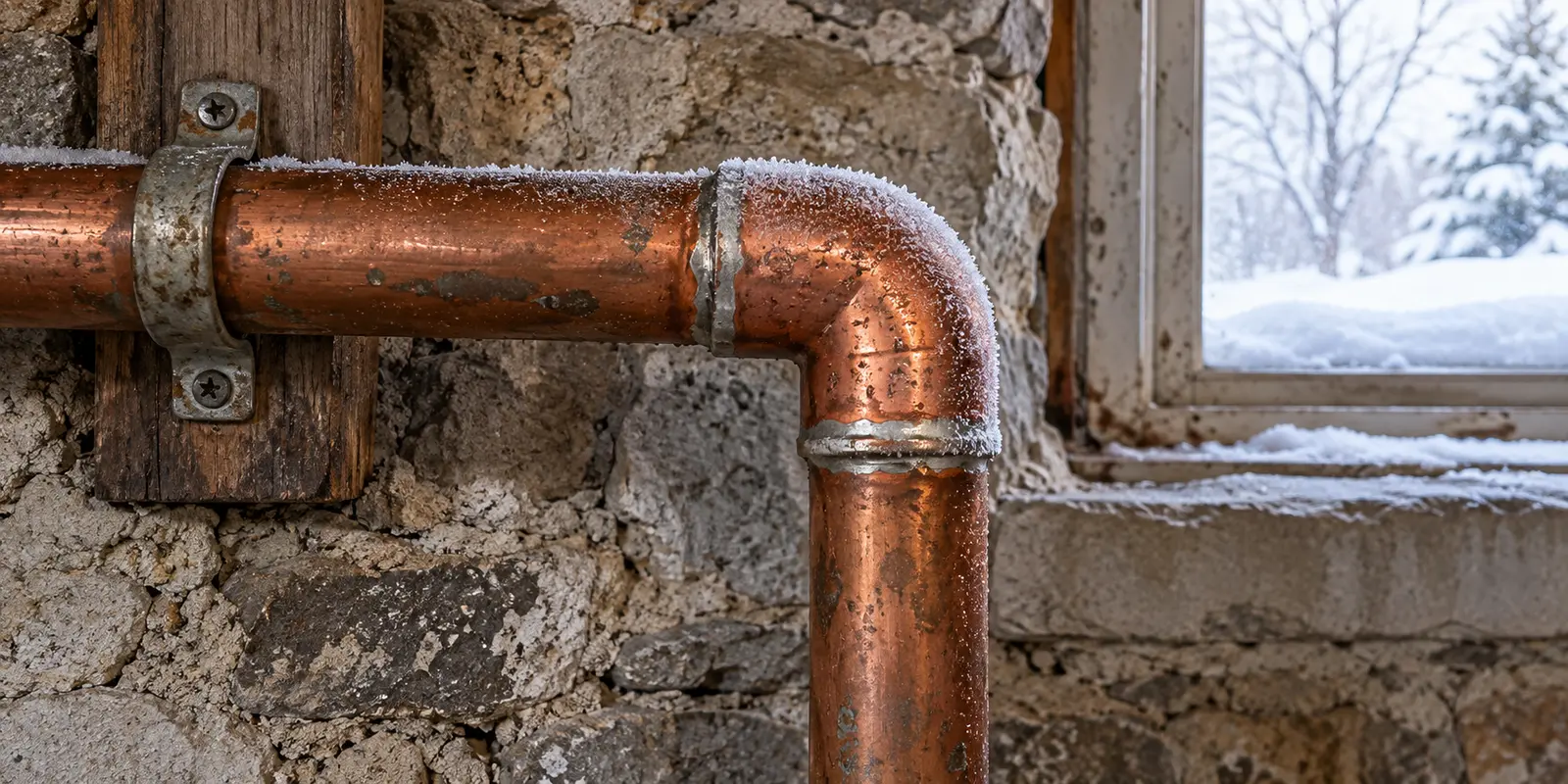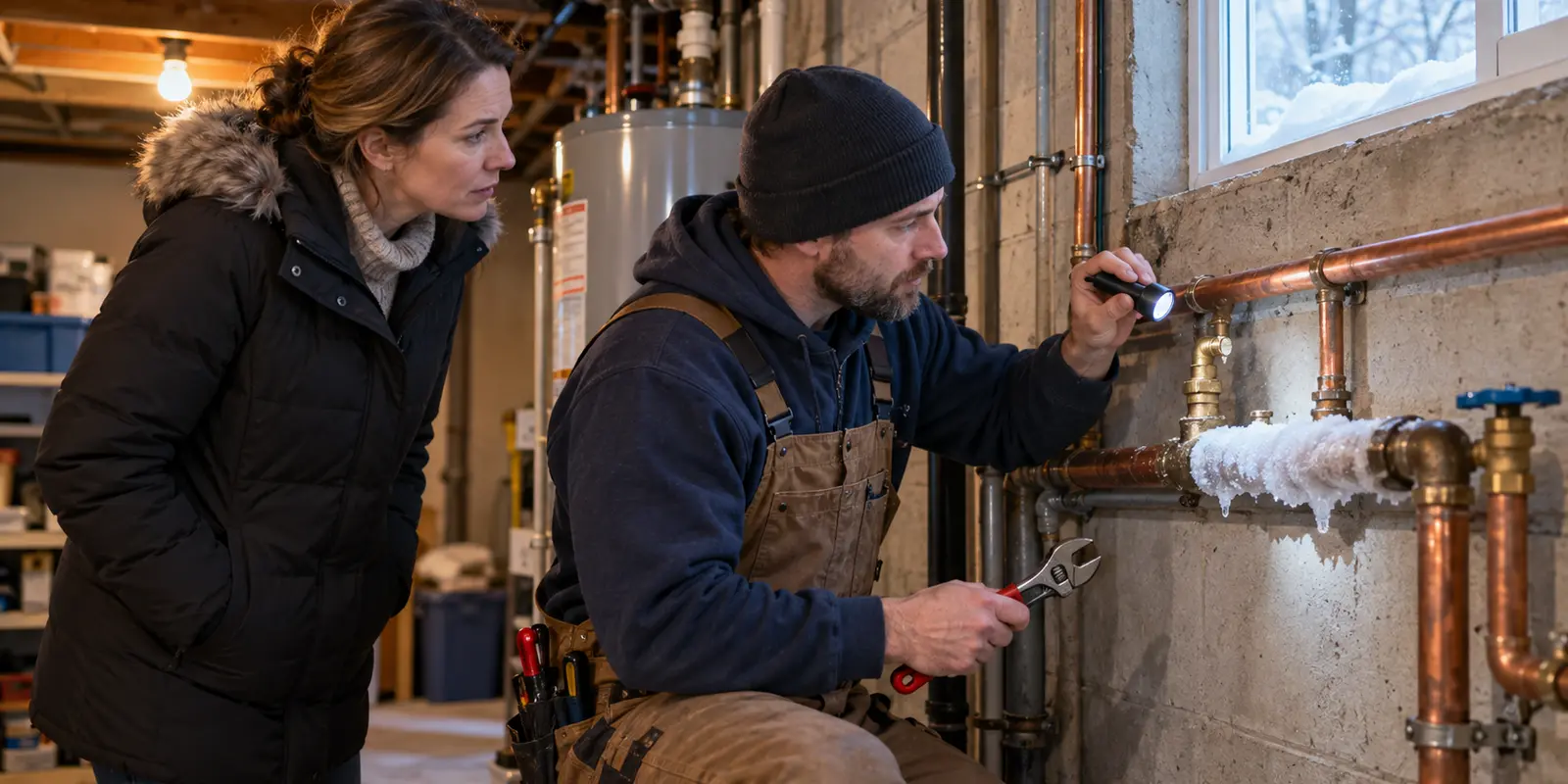
A frozen pipe can start with something easy to miss: a faucet that slows to a trickle on a bitterly cold morning. Acting early can help limit damage, but a frozen line may split inside a wall and leak as it thaws. Know where your main water shutoff is, and treat signs of a leak as urgent.
The Home Emergency Decision Assistant prototype includes burst-pipe concerns among its planned categories. Detailed scenario guidance remains unavailable pending human safety review.
How to spot a frozen pipe
A pipe may be frozen if one faucet has little or no water while other fixtures still work. You may also notice frost on an exposed pipe, a bulge, or water stains near a wall, ceiling, or cabinet. Pipes in unheated basements, crawl spaces, garages, and exterior walls are more exposed to cold.
A frozen section is not always visible. If water flow changes suddenly during a cold snap, do not assume the problem is limited to the faucet.
What to do if you suspect a frozen pipe
- Open the affected faucet slightly. A small flow gives water a path as the ice melts. If you have no water at several fixtures, the issue could involve the main supply; contact your water provider or a plumber for guidance.
- Warm the area gently if the pipe is exposed and safe to reach. The American Red Cross recommends gradual thawing methods and warns against open flames. You can wrap the pipe with towels soaked in warm water, replacing them as they cool. Keep the faucet open while warming.
- Keep heat away from standing water and electrical hazards. Do not use a torch, stove, charcoal heater, or other open flame. Avoid plugging in a hair dryer or other electrical device where water is present or the area is wet.
- Find the main shutoff if there is a leak. If water is escaping and you can reach the valve safely, turn off the home’s water supply and call a plumber. If water is near electrical equipment, do not enter the area; get help.
- Watch the pipe as it thaws. A crack can become obvious only after water starts moving again. If you see a leak, shut off the water if safe and arrange urgent plumbing help.
See the American Red Cross guide to frozen pipes for additional prevention and thawing guidance.
When a plumber should inspect the line
Call a plumber if you find a leak, a split or bulging pipe, water damage, or a line that remains frozen despite gentle warming. A pipe inside a wall, ceiling, crawl space, or other inaccessible area should be left to a professional. Get help if you cannot identify the affected line or safely shut off the water.
If you suspect a burst pipe, take photos of the damage once it is safe and keep people away from wet electrical equipment. Do not close walls or cabinets over a damp area before the leak has been found and the space can dry.
Our guide to signs of a hidden plumbing leak can help you recognize water damage that is not immediately visible.
How to reduce the chance of frozen pipes
Before a severe cold spell, disconnect garden hoses and follow local guidance for outdoor faucets. Keep garage doors closed if water lines pass through the garage. Open cabinet doors below sinks on exterior walls so warm room air can circulate, and keep the home warm even when you are away. In very cold weather, a small steady trickle from a vulnerable faucet may help, but follow local utility or plumbing advice if you are unsure.
If you will be away for an extended period, ask a plumber about protecting exposed lines and whether shutting off and draining the water system is appropriate for your home. The right steps depend on the plumbing layout and local conditions.
Frequently asked questions
Can I thaw a frozen pipe with a hair dryer?
Only if the pipe and surrounding area are dry, there is no standing water or electrical hazard, and you can keep the device safely away from water. Use low, steady heat and never leave it unattended. Warm towels are another option. Do not use an open flame.
Should I turn off the water when a pipe freezes?
If there is a leak or you suspect a pipe has burst, shut off the main water supply if you can reach the valve safely. If there is no leak, keep the affected faucet slightly open while the pipe warms. If you are unsure, call a plumber.
Will a frozen pipe always burst?
No, but ice can expand and damage a pipe, and a crack may not leak until the ice thaws. Check the area as water flow returns and seek help if you notice moisture or a drop in pressure.
Find plumbing service options
Use Find plumbing service options to open the service directory and choose plumbing. Confirm that the provider serves your location, ask about availability and fees, and describe the affected fixture and any visible leak. Quick Service Search connects people with service providers; it does not perform plumbing repairs.
Share this article
Know someone who might find this useful? Pass it along.