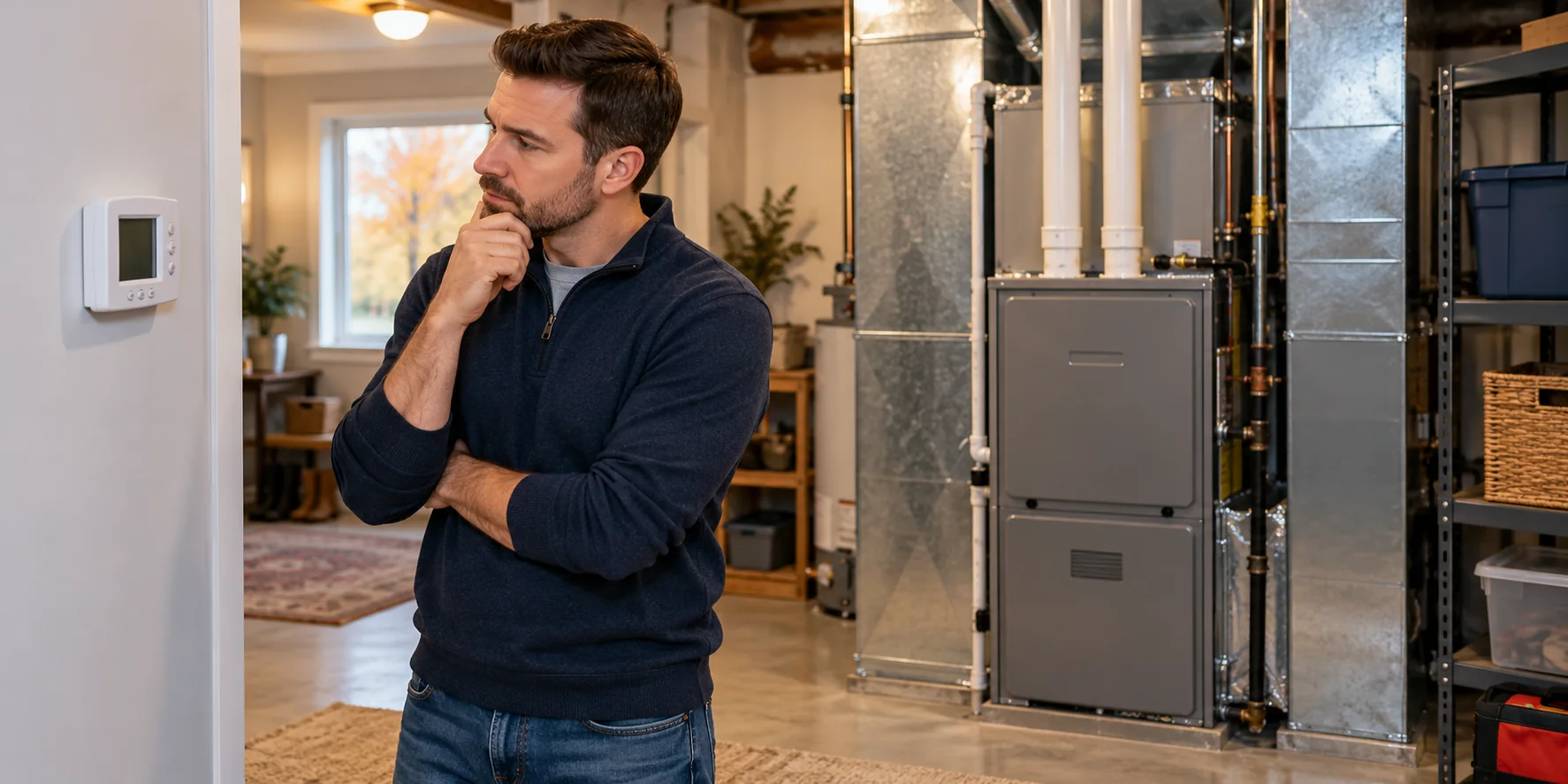
When a furnace won’t turn on, the house can get uncomfortable quickly. A thermostat setting, a dirty air filter, or a tripped safety control may be involved, but the same symptom can also point to a fault that needs professional diagnosis.
Start with a few checks that do not require opening the furnace. If the system still will not start, note what you observed and arrange service. Do not remove access panels, touch wiring, or attempt to repair a gas or oil furnace yourself.
The Home Emergency Decision Assistant prototype also lists heating and electrical concerns; its detailed scenario guidance is not yet available pending human safety review.
1. Check the thermostat
Set the thermostat to Heat and raise the target temperature a few degrees above the current room temperature. Check its schedule for an away setting, hold, or other program that may be overriding your adjustment.
If the display is blank or behaving unusually, check the thermostat manual for battery or power guidance. Give the system time to respond after changing a setting; many furnaces have a short start-up sequence. Avoid repeatedly switching the system on and off.
2. Look at the furnace switch and circuit breaker
Some furnaces have a nearby power switch that looks like a standard wall switch. If you can identify it clearly and reach it safely, check that it has not been turned off accidentally. Do not remove a furnace cover to search for a switch.
You can also look at the circuit breaker panel. If a breaker has tripped, do not keep resetting it. A breaker that trips again can signal an electrical problem; leave it off and contact a qualified professional. If you are unsure which breaker serves the furnace, do not guess.
3. Inspect an accessible air filter
A heavily clogged filter can restrict airflow and cause some systems to stop or limit operation. Check only a filter that is designed to be user-accessible, following the furnace or filter instructions. If it needs replacing, use the correct size and type, and follow the airflow direction marked on the filter.
Do not reach into the equipment or remove a service panel to find a filter. If the filter is difficult to access or you are unsure what to use, leave it for a technician.
4. Check vents and note what the furnace does
Make sure supply vents and return grilles are not covered by rugs, curtains, or furniture. Clear obvious obstructions without taking apart the ductwork.
Then listen and observe from a safe distance. Is the furnace silent, clicking, starting briefly, or running without warm air? If a status light or error code is visible without opening a panel, write it down. These details can help a technician understand what happened, but they do not identify the cause on their own.
When to stop troubleshooting
Call a qualified heating professional if the furnace still will not start after these basic checks, if it starts and stops repeatedly, or if a breaker trips. Also stop if you notice water around the equipment, a burning or electrical smell, unusual banging, or visible damage. Do not keep running equipment that appears unsafe.
If a carbon monoxide alarm sounds, leave the home and contact emergency services from outside. Carbon monoxide has no smell or color, and fuel-burning heating equipment can produce it. The CDC’s carbon monoxide safety guidance recommends having fuel-burning heating systems serviced by a qualified technician. If you smell gas, leave without operating switches or using a flame, then contact your gas utility or emergency services from a safe location.
Do not use a gas oven to heat your home. If indoor temperatures are falling and you have infants, older adults, health concerns, or plumbing at risk of freezing, treat the lack of heat as time-sensitive and seek help promptly.
What to tell a furnace repair technician
A concise description can make a furnace service call more useful. Before calling, note:
- Whether the thermostat display is on and set to Heat.
- When the furnace last worked and when the problem began.
- Whether you hear clicking, a fan, or no sound at all.
- Any visible status light or error code.
- The furnace make and model, if the label is accessible without removing a panel.
- Any recent filter change or service visit.
Ask whether the provider services your furnace type, what the diagnostic or after-hours charge is, and whether you will receive a written estimate before repair work begins. Confirm the service area, appointment availability, and any fees directly with the provider.
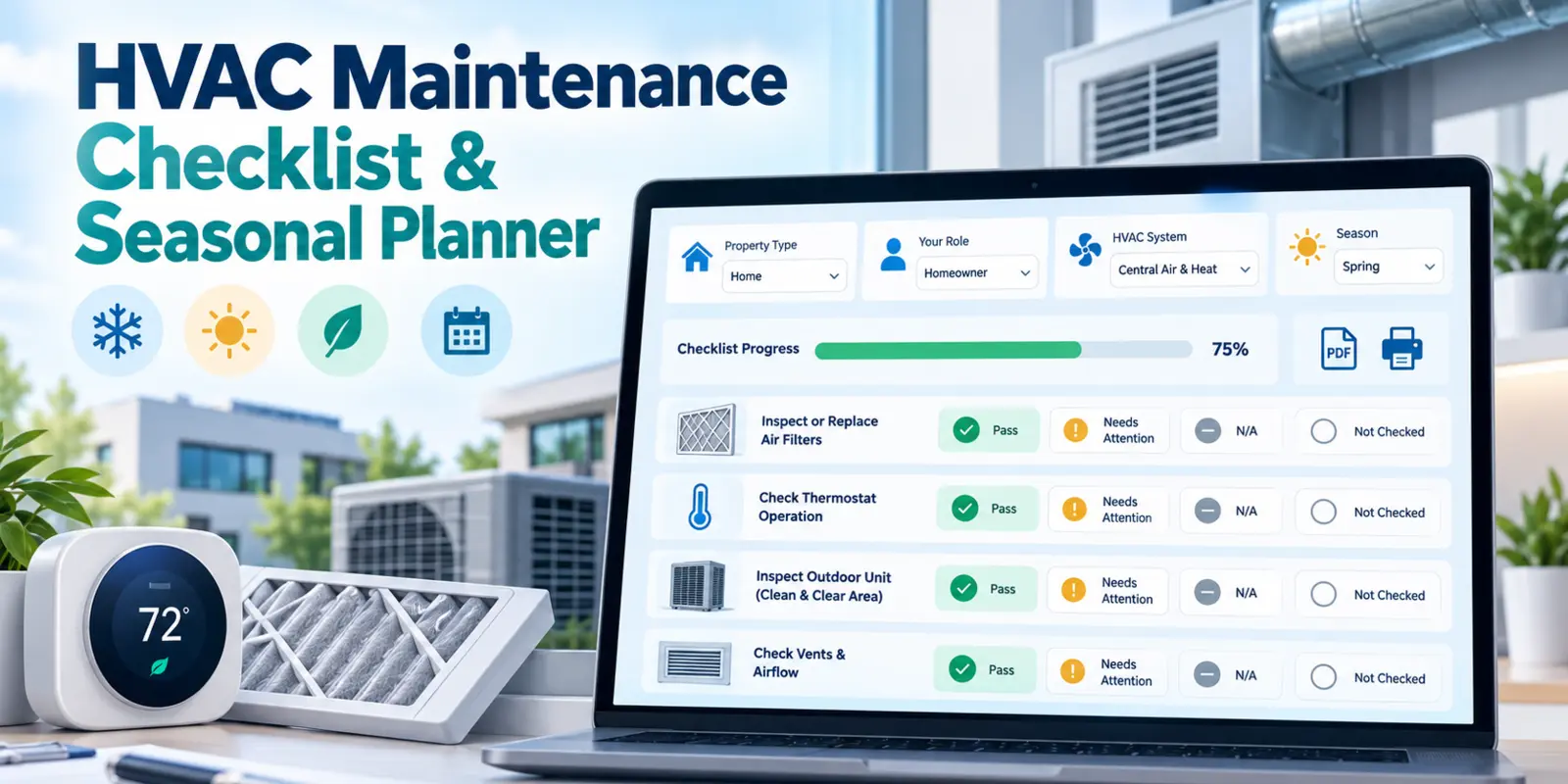
For seasonal care, see our HVAC maintenance checklist. If your system is running but not cooling in warmer weather, read what to check when your AC is not cooling.
Frequently asked questions
Why won’t my furnace turn on when the thermostat is set to heat?
Check that the thermostat is in Heat mode, its target temperature is above the room temperature, and its schedule is not overriding the setting. If those settings look right and the furnace remains off, it may need professional diagnosis.
Can a dirty filter stop a furnace from working?
A clogged filter can restrict airflow and may cause some systems to limit or stop operation. Check an accessible filter according to the equipment instructions. The filter may not be the only cause, so arrange service if the furnace still will not run after replacing a dirty filter with the correct type.
Is it safe to restart a furnace that stopped working?
Follow the equipment manual for any user reset instructions. Do not repeatedly reset the furnace, cycle its power, or reset a breaker that trips again. If the system continues to stop, contact a qualified technician.
What should I do if my furnace clicks but does not start?
Note when the clicking happens and whether the furnace starts at all. Avoid opening the unit or attempting ignition repairs. Repeated clicking without normal operation is a reason to contact a qualified heating professional.
Find HVAC service options
Use Find HVAC service options to open the service directory and choose HVAC. Confirm that the provider serves your address, ask about availability and fees, and discuss the diagnosis and price directly. Quick Service Search connects consumers with providers; it does not perform furnace repairs.
Share this article
Know someone who might find this useful? Pass it along.