Your heating and cooling system is easy to forget when every room feels comfortable. A simple maintenance routine gives you a reason to check it before an unusual noise, a dirty filter, or a missed service visit becomes a bigger inconvenience.
A practical HVAC maintenance checklist combines monthly homeowner checks with professional service before the heating and cooling seasons. Start with accessible filters, clear vents, thermostat settings, and visible changes around the equipment. Leave internal electrical work, refrigerant handling, and combustion checks to a qualified technician.
Use this guide to organize your home HVAC maintenance, then adjust the schedule to your equipment manufacturer’s instructions. Central air conditioners, furnaces, heat pumps, and ductless systems do not all have the same care requirements.
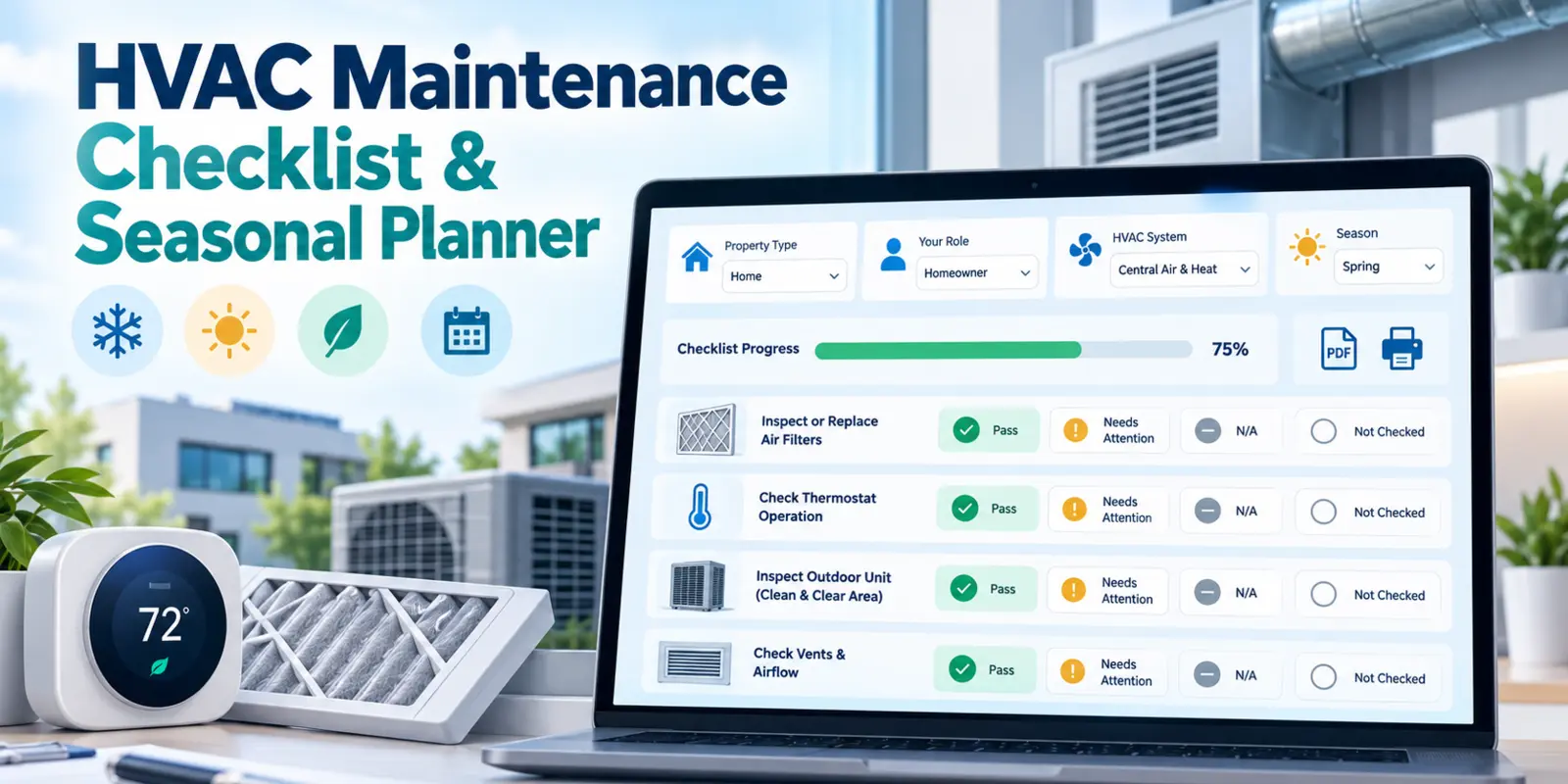
Need a checklist you can fill in or print? Open our free HVAC Maintenance Checklist & Seasonal Planner to choose your role, property type, HVAC system, and season. It builds a more relevant list for your situation, with task statuses, notes, and printable blank or completed reports. This article covers what to check; our step-by-step planner guide explains how to use every feature.
Your HVAC maintenance checklist at a glance
Monthly homeowner checks
- Inspect accessible air filters and replace or clean them when needed, following the equipment instructions.
- Check that furniture, curtains, and rugs are not blocking supply registers or return grilles.
- Review thermostat settings and programmed schedules.
- Look for visible water or new stains around accessible equipment.
- Note changes in noise, airflow, operating patterns, or room comfort.
- Record what you checked and any follow-up needed.
Before the cooling season
- Arrange professional air conditioning or heat pump maintenance.
- Look for vegetation or stored items crowding the outdoor unit.
- Share any cooling problems left unresolved from the previous summer.
- Confirm which inspection and cleaning tasks the appointment includes.
Before the heating season
- Arrange professional service for your heating equipment.
- Clear stored items from the equipment area, respecting manufacturer clearances.
- Review thermostat settings for heating season.
- Report past heating faults or rooms that remained uncomfortable.
These checks help you notice changes. They do not replace a professional inspection or certify that equipment is safe.
Turn this HVAC checklist into a seasonal inspection record
For a paper or digital record, the free HVAC maintenance planner provides a practical next step:
- Answer four setup questions. Select Homeowner, Business Owner, Employee, or Professional HVAC Technician; then choose a residential or commercial property, the equipment type, and Spring, Summer, Fall, Winter, or Annual Inspection.
- Generate a relevant checklist. Choose from central heating and cooling, heat pumps, furnaces, ductless mini-splits, rooftop units, or Not Sure. The tasks adapt rather than assuming every system needs the same checks.
- Record each observation. Mark items Pass, Needs Attention, Not Applicable, or Not Checked. Add task notes while the page is open and review the progress and findings summary.
- Print what you need. Print a blank checklist for handwriting, a completed report, or both. Your browser can also save a printout as a PDF.
The planner can retain non-sensitive setup choices and task statuses in browser storage, when available. Typed notes, inspector details, and measurements are session-only: print or save your completed report before leaving if you need them. A completed checklist is not an equipment safety certification.
1. Check your HVAC filter regularly
Make a monthly filter inspection part of your routine, especially during heavy heating or cooling use. Inspection frequency and replacement frequency are different: a filter does not automatically need replacing every time you look at it.
Follow the manual for safe access and switch the system off as directed before handling the filter. Use the specified size and a compatible filter type. Replace disposable filters; only wash filters designed to be reusable, following their care instructions.
Ask your technician to show you the filter location if you are unsure. Some homes have several filters, and ductless indoor units may have their own cleaning requirements. Do not remove service panels or force access to reach something you cannot identify.
Record the installation date and filter specification. That saves you from guessing which replacement to buy next time.
2. Keep air paths clear
Walk through the house and check around supply registers and return grilles. A sofa moved during redecorating or a curtain hanging over a grille can create an obstruction that is easy to miss.
Gently remove accessible surface dust using a method suitable for the grille. Avoid reaching tools into ductwork or treating a dusty grille as proof that the entire duct system needs cleaning.
If one room remains uncomfortable after obvious obstructions are removed, note when the problem occurs. A room that gets warm in afternoon sunlight may need a different investigation from a room with consistently weak airflow.
3. Review thermostat settings before each season
Confirm that the thermostat mode matches the season and its schedule reflects when people are home. Look for an old vacation setting or an unexpected hold that overrides the normal program.
If the thermostat uses replaceable batteries, follow its replacement instructions. Ask your technician to explain unfamiliar controls during the next visit.
Avoid applying the same scheduling strategy to every system. A heat pump may need different settings from a conventional furnace. Ask what suits your equipment and household routine.
4. Check the area around outdoor equipment
Look for leaves, snow, vegetation, or stored objects obstructing the space around the outdoor unit. Follow the manufacturer’s clearance requirements rather than assuming one distance fits every installation.
Keep your inspection external. Do not remove the fan guard, reach inside, or use a pressure washer on the coils. Ask the provider which cleaning tasks are appropriate for you and which belong in a professional visit.
After yard work or a storm, take another look from a safe position. If equipment appears damaged or blocked in a way you cannot safely address, contact a professional.
5. Plan professional HVAC maintenance
Schedule cooling maintenance before the hottest weather and heating maintenance before the coldest period. For equipment used in both seasons, confirm a service schedule based on the model, usage, and manufacturer guidance.
A professional visit may cover electrical connections, controls, airflow, drainage, and equipment-specific cleaning. Cooling service may include coil and refrigerant checks. Fuel-burning heating equipment needs appropriate combustion and venting assessment. The scope should match your system.
Before booking an HVAC tune-up, ask:
- Does the company service my equipment type and model?
- What inspection and cleaning work is included?
- Are filters or additional cleaning charged separately?
- Will I receive written findings?
- Will you request approval before carrying out repairs?
Keep maintenance and repair decisions separate. A technician may identify an issue during an inspection, but you should understand the diagnosis, proposed work, and price before authorizing it.
6. Keep a useful maintenance record
Your record can be a note on your phone or a folder with service receipts. Include the equipment model, filter specification, service dates, reported symptoms, and work completed.
Describe problems with concrete observations: “the upstairs bedroom stays warm in the evening” is more useful than “the AC seems bad.” Note whether the issue affects one room or the whole house and whether it happens consistently.
If the system already runs without cooling the home, read our guide to what to check when your AC is not cooling before the service call.
Match the checklist to the system you’re maintaining
A general HVAC checklist should not turn into a one-size-fits-all repair procedure. Use the equipment owner’s manual first, then organize observations around the installed system:
Central air conditioning and heating
Accessible filter condition, thermostat settings, supply and return airflow, visible condensate concerns, and service history
Heat pump
Heating and cooling performance over time, outdoor-unit frost or obstructions seen from a safe place, and unusual operating patterns
Furnace or heating-only equipment
Thermostat operation, airflow complaints, visible alerts, and records of professional heating maintenance
Ductless mini-split
Manufacturer-accessible filters, indoor-unit airflow, visible leaks, and room-by-room comfort
Commercial rooftop unit
Staff observations and maintenance records; roof access and technical checks belong to authorized, qualified personnel
If your heat pump seems to deliver cool air during cold weather, see heat pump blowing cold air in winter: normal behavior and warning signs before assuming the system has failed. Do not remove panels, access a rooftop, or test electrical or refrigerant components to complete a checklist.
When to stop routine checks and call for help
Do not wait for the next appointment if you notice persistent leaks, recurring shutdowns, unusual electrical smells, or a major change in operation. Avoid equipment near standing water and do not repeatedly reset a tripping breaker.
If you smell gas, a carbon monoxide alarm sounds, or you see smoke or fire, leave the building and contact emergency services or the gas utility from a safe location. A maintenance checklist is not an emergency troubleshooting procedure.
Make your next maintenance visit more useful
Keep one record for each heating or cooling system. Record the model from an accessible label, the filter size, the last filter change and the last professional service date.
- Before the visit: List rooms that feel unusually warm or cold and when the problem occurs.
- When booking: Ask which checks are included for your specific equipment and whether replacement parts are extra.
- After the visit: Request a written summary separating completed work, recommended repairs and future maintenance.
Frequently asked questions
How often should HVAC maintenance be done?
Inspect accessible filters monthly and follow the manufacturer’s care schedule. Plan professional checks ahead of heating and cooling seasons, with the exact frequency confirmed for your system.
Can I do HVAC maintenance myself?
You can usually handle basic checks described in your owner’s manual, such as inspecting an accessible filter and keeping vents unobstructed. Internal repairs, electrical testing, refrigerant work, and combustion assessment require qualified help.
What should an HVAC tune-up include?
The scope depends on the equipment. Ask for a written list of checks and cleaning tasks, plus any exclusions, before booking. The phrase “tune-up” alone does not establish what is included.
How much does HVAC maintenance cost?
Pricing depends on the equipment, number of systems, location, and service scope. Ask whether the quote covers one visit or a maintenance plan and whether repairs or extra cleaning cost more.
Find a heating or air conditioning service connection
Ready to arrange maintenance? Visit the Quick Service Search Services directory and choose the relevant HVAC, heating, or air-conditioning option available for your location. Confirm coverage, equipment compatibility, appointment availability, fees, and the maintenance scope directly with the provider.
If you’re not ready to contact a provider, generate a personalized HVAC checklist and keep a record of the questions you want to ask at your next service visit.
Quick Service Search helps consumers connect with service providers; it does not perform HVAC inspections, maintenance, or repairs.
Share this article
Know someone who might find this useful? Pass it along.